
Healthy gums are the foundation of strong teeth. If your gums are bleeding, receding, or inflamed, it’s important to get them checked out promptly. The Delft Dental Practice offers Specialized periodontology in Delft for patients with complex gum problems.
The treatments are performed by Michail Monogyios, MSc, board-certified periodontist (NVvP). You are welcome to visit us after receiving a referral from your dentist, dental hygienist, orthodontist, or medical specialist.
Periodontology focuses on the examination and treatment of the gums and the supporting tissues around teeth and dental implants.
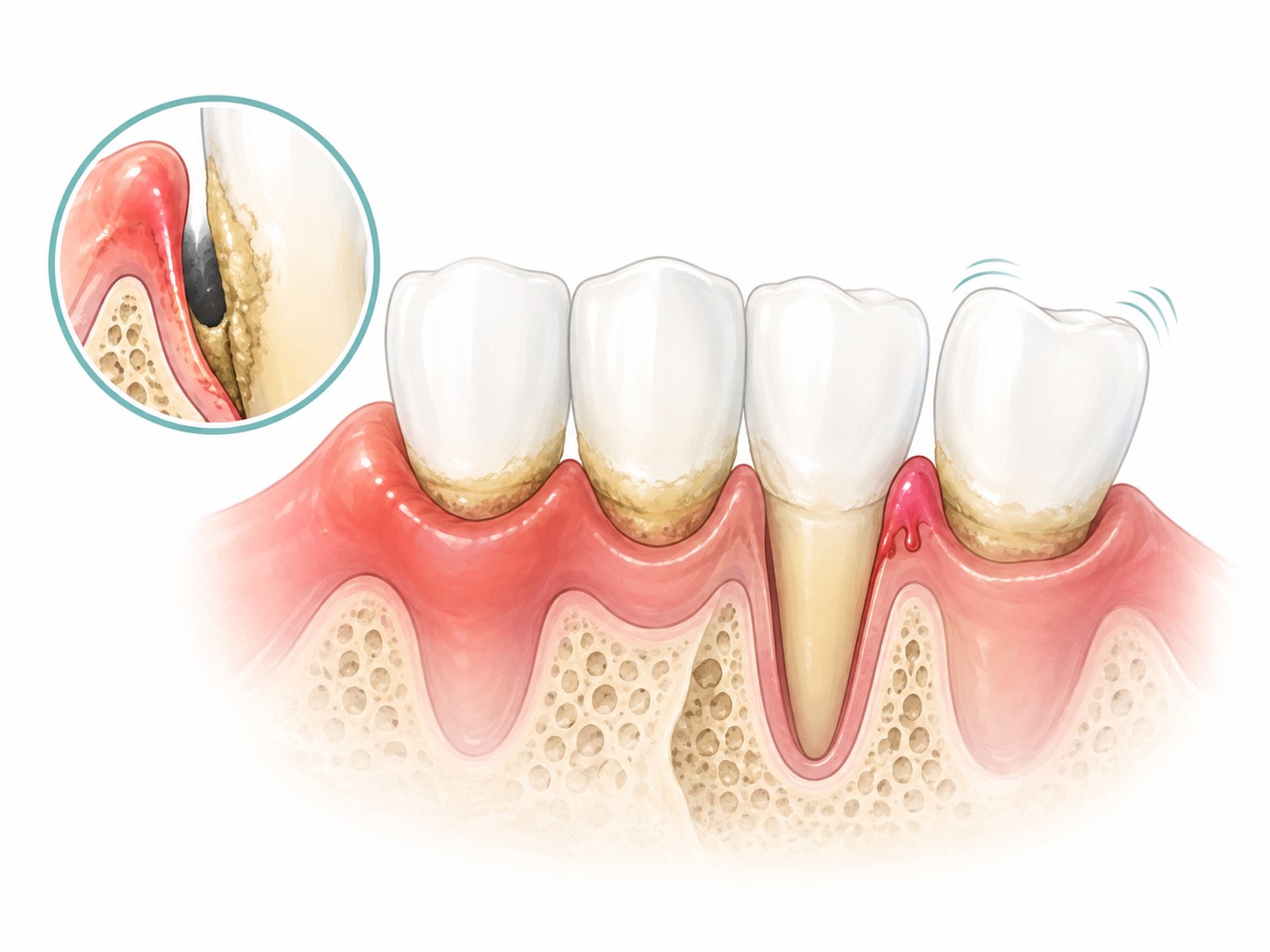
Superficial gum inflammation is called gingivitis. Without treatment, the inflammation can sometimes spread to the jawbone. This causes deeper spaces to form between the gums and the teeth. We call these spaces “pockets.” When the jawbone and other supporting tissues are also affected, we refer to this as periodontitis.
Periodontitis often causes little pain. As a result, the condition sometimes goes unnoticed for a long time. Without proper treatment, further bone loss occurs. Teeth then lose more and more of their anchorage and, in advanced stages, become loose.
Timely treatment helps limit further damage and supports the preservation of your natural teeth.
When is it advisable to see a periodontist?
Your dentist or dental hygienist will refer you to a periodontist if your gum problems are severe, complex, or persistent.
Your dentist, dental hygienist, orthodontist, or medical specialist will refer you to our practice. We would appreciate receiving any relevant X-rays, measurements, and information about previous treatments.
Michail Monogyios, MSc, will discuss your symptoms, health, medication use, and dental history. He will then examine your gums and teeth.
We will explain the results of the examination to you. We will discuss the proposed treatment plan, the expected outcomes, any risks, and the costs.
Treatment is tailored to the severity and location of the problem. Your efforts at home are an important part of the process.
At De Delftse Tandartspraktijk, specialized gum care is provided by Michail Monogyios, MSc, a board-certified periodontist with the NVvP.
Michail completed his dental degree at Charles University. He then went on to complete the three-year postgraduate program in Periodontology and Implantology at the Academic Center for Dentistry Amsterdam (ACTA).

Treatment begins with a comprehensive examination. The periodontist assesses your gums, measures the pockets, and examines the support structures around your teeth. X-rays are taken as needed to assess any bone loss.
Based on the findings, you will receive a diagnosis and a personalized treatment plan.
In cases of periodontitis, plaque and tartar also accumulate below the gum line. These areas are difficult to reach at home. During treatment, the root surfaces are professionally cleaned.
You will also receive personalized instructions on how to clean your teeth. Your daily oral care plays a major role in your recovery and long-term results. The combination of good oral hygiene and professional treatment helps stop the inflammation. Learn more about the initial treatment.
If deep or hard-to-reach pockets remain after the initial treatment, surgical treatment may sometimes be necessary. During this procedure, the periodontist gains better access to the root surfaces and the surrounding tissue.
Before the procedure, Michail Monogyios, MSc, will carefully explain why the procedure is recommended and what to expect during your recovery.
Receding gums can sometimes lead to sensitive tooth necks, a change in appearance, or an increased risk of root damage.
The periodontist investigates the cause and determines the appropriate course of action. Depending on your situation, treatment may consist of advice, guidance on oral hygiene, or gum surgery.
Inflammation can also occur around implants. When the surrounding jawbone is affected, this is referred to as peri-implantitis.
Early diagnosis is important. The periodontist evaluates the gums, the condition of the implant, and the available bone. This is followed by a treatment plan aimed at reducing inflammation and protecting the implant.
For certain types of bone loss, regenerative treatment may be appropriate. The goal is to support the regeneration of lost supporting tissue around a tooth.
Your eligibility depends, among other things, on the shape of the bone defect, the severity of the inflammation, your oral hygiene, and personal risk factors.
Referrals are usually made by your dentist or dental hygienist. Orthodontists, oral surgeons, and medical specialists may also refer patients to a periodontist. If you have any questions, please contact our practice.